Review


te monocut lambda dna molecular weight  (New England Biolabs)


Bioz Verified Symbol New England Biolabs is a verified supplier

Bioz Manufacturer Symbol New England Biolabs manufactures this product  

  • Logo
  • About
  • News
  • Press Release
  • Partners
  • Contact
  • Bioz Stars
  • Bioz vStars
  • 97

    Structured Review

    New England Biolabs te monocut lambda dna molecular weight
    Te Monocut Lambda Dna Molecular Weight, supplied by New England Biolabs, used in various techniques. Bioz Stars score: 97/100, based on 1866 PubMed citations. ZERO BIAS - scores, article reviews, protocol conditions and more
    https://www.bioz.com/product/lambda+monocut/Lambda+DNA/pm32599056-304-10-18
    Average 97 stars, based on 1866 article reviews
    te monocut lambda dna molecular weight - by Bioz Stars, 2026-11
    97/100 stars

    Images

    Related Articles

    Amplification:

    Article Title: Qualification of macromolecular crowding in the DNA hybridization process at the single-molecule level
    Article Snippet: Journal Pre-proof Qualification of macromolecular crowding in the DNA hybridization process at the single-molecule level Yilin He, Ting Liang, Zuoshan Liu, Yuyu Feng, Junhua Yuan, Rongri Tan, Hu Chen, Yanhui Liu PII: S0577-9073(26)00395-3 DOI: https://doi.org/10.1016/j.cjph.2026.10.035 Reference: CJPH 3741 To appear in: Chinese Journal of Physics Received date: 22 May 2026 Revised date: 29 September 2026 Accepted date: 30 October 2026 Please cite this article as: Yilin He, Ting Liang, Zuoshan Liu, Yuyu Feng, Junhua Yuan, Rongri Tan,

    Article Title: CRISPR-mediated gap-based replacement enables site-specific DNA lesion insertion into long DNA and nucleosomes.
    Article Snippet: .. To test the efficiency of DNA damage insertion, a 1036- bp DNA fragment was generated via PCR amplification using λ-DNA (New England Biolabs, N3011S) as a template with primers (1036F and 1036R) ( Supplementary Table S1 ). ..

    Polymerase Chain Reaction:

    Article Title: Qualification of macromolecular crowding in the DNA hybridization process at the single-molecule level
    Article Snippet: Journal Pre-proof Qualification of macromolecular crowding in the DNA hybridization process at the single-molecule level Yilin He, Ting Liang, Zuoshan Liu, Yuyu Feng, Junhua Yuan, Rongri Tan, Hu Chen, Yanhui Liu PII: S0577-9073(26)00395-3 DOI: https://doi.org/10.1016/j.cjph.2026.10.035 Reference: CJPH 3741 To appear in: Chinese Journal of Physics Received date: 22 May 2026 Revised date: 29 September 2026 Accepted date: 30 October 2026 Please cite this article as: Yilin He, Ting Liang, Zuoshan Liu, Yuyu Feng, Junhua Yuan, Rongri Tan,

    Article Title: CRISPR-mediated gap-based replacement enables site-specific DNA lesion insertion into long DNA and nucleosomes.
    Article Snippet: .. To test the efficiency of DNA damage insertion, a 1036- bp DNA fragment was generated via PCR amplification using λ-DNA (New England Biolabs, N3011S) as a template with primers (1036F and 1036R) ( Supplementary Table S1 ). ..

    Article Title: An intramembrane chaperone catalyzes conformational editing in membrane protein folding
    Article Snippet: .. The DNA handle, modified at one end with a primary 25 amine and at the other with an azide, was generated by PCR using λ DNA template (NEB, N3011S) and synthesized primers (IDT): forward primer (5′-CGCCCGTGAAGAGAAAGA-3′) modified with an amine at the 5′ end and reverse primer (5′-TCGCCACCATCATTTCCA-3′) modified with an azide at the 5′ end. .. Approximately 8 ml of the PCR product was purified using a HiSpeed Plasmid Maxi Kit (Qiagen, 12663) and eluted in 1 ml of 0.1 M sodium bicarbonate (pH 8.3).

    other:

    Article Title: Biocatalytic synthesis of S-adenosyl-l-methionine analogues for allosteric activation of cystathionine-β-synthase.
    Article Snippet: Methylation of lambda DNA by SAM analogues was performed using a commercial kit (M0211S, New England Biolabs).

    Generated:

    Article Title: Spatial 5mC-seq profiling of embryos and decidua after implantation in mammals.
    Article Snippet: DNA methylation is vital for development and diseases, yet no spatial DNA methylation profiling technology has been reported.. Here we developed spatial 5mC-seq (SmC-seq), a microfluidic-based method providing unbiased genome-wide methylome at near single-cell resolution.. Applying SmC-seq to mouse post-implantation development revealed a clear spatial heterogenous pattern of DNA methylation in inner cell mass-derived tissues.

    Article Title: CRISPR-mediated gap-based replacement enables site-specific DNA lesion insertion into long DNA and nucleosomes.
    Article Snippet: .. To test the efficiency of DNA damage insertion, a 1036- bp DNA fragment was generated via PCR amplification using λ-DNA (New England Biolabs, N3011S) as a template with primers (1036F and 1036R) ( Supplementary Table S1 ). ..

    Article Title: An intramembrane chaperone catalyzes conformational editing in membrane protein folding
    Article Snippet: .. The DNA handle, modified at one end with a primary 25 amine and at the other with an azide, was generated by PCR using λ DNA template (NEB, N3011S) and synthesized primers (IDT): forward primer (5′-CGCCCGTGAAGAGAAAGA-3′) modified with an amine at the 5′ end and reverse primer (5′-TCGCCACCATCATTTCCA-3′) modified with an azide at the 5′ end. .. Approximately 8 ml of the PCR product was purified using a HiSpeed Plasmid Maxi Kit (Qiagen, 12663) and eluted in 1 ml of 0.1 M sodium bicarbonate (pH 8.3).

    Lambda DNA Preparation:

    Article Title: Spatial 5mC-seq profiling of embryos and decidua after implantation in mammals.
    Article Snippet: DNA methylation is vital for development and diseases, yet no spatial DNA methylation profiling technology has been reported.. Here we developed spatial 5mC-seq (SmC-seq), a microfluidic-based method providing unbiased genome-wide methylome at near single-cell resolution.. Applying SmC-seq to mouse post-implantation development revealed a clear spatial heterogenous pattern of DNA methylation in inner cell mass-derived tissues.

    Article Title: Nuclease-NTPase antiphage defence systems use conserved molecular features to control bacterial immunity.
    Article Snippet: Bacteria encode diverse defence systems, including restriction– modification and CRISPR–Cas, that cleave nucleic acid to protect against phage infection.. Bioinformatic analyses demonstrate that many recently identified antiphage defence operons comprise a nuclease and NTPase protein, suggesting that additional nucleic acid-targeting systems remain to be understood.. Here we develop large-scale comparative cell biology and biochemical approaches to analyse 16 nuclease–NTPase systems and define molecular features that control antiphage defence.

    Modification:

    Article Title: An intramembrane chaperone catalyzes conformational editing in membrane protein folding
    Article Snippet: .. The DNA handle, modified at one end with a primary 25 amine and at the other with an azide, was generated by PCR using λ DNA template (NEB, N3011S) and synthesized primers (IDT): forward primer (5′-CGCCCGTGAAGAGAAAGA-3′) modified with an amine at the 5′ end and reverse primer (5′-TCGCCACCATCATTTCCA-3′) modified with an azide at the 5′ end. .. Approximately 8 ml of the PCR product was purified using a HiSpeed Plasmid Maxi Kit (Qiagen, 12663) and eluted in 1 ml of 0.1 M sodium bicarbonate (pH 8.3).

    Synthesized:

    Article Title: An intramembrane chaperone catalyzes conformational editing in membrane protein folding
    Article Snippet: .. The DNA handle, modified at one end with a primary 25 amine and at the other with an azide, was generated by PCR using λ DNA template (NEB, N3011S) and synthesized primers (IDT): forward primer (5′-CGCCCGTGAAGAGAAAGA-3′) modified with an amine at the 5′ end and reverse primer (5′-TCGCCACCATCATTTCCA-3′) modified with an azide at the 5′ end. .. Approximately 8 ml of the PCR product was purified using a HiSpeed Plasmid Maxi Kit (Qiagen, 12663) and eluted in 1 ml of 0.1 M sodium bicarbonate (pH 8.3).


    Similar Products

    94
    New England Biolabs λ dna monocut mix
    λ Dna Monocut Mix, supplied by New England Biolabs, used in various techniques. Bioz Stars score: 94/100, based on 1 PubMed citations. ZERO BIAS - scores, article reviews, protocol conditions and more
    https://www.bioz.com/product/lambda+monocut/Lambda+DNA-Mono+Cut+Mix/pm40907426-94-77-102
    Average 94 stars, based on 1 article reviews
    λ dna monocut mix - by Bioz Stars, 2026-11
    94/100 stars
      Buy from Supplier

    94
    New England Biolabs monocut lambda
    Monocut Lambda, supplied by New England Biolabs, used in various techniques. Bioz Stars score: 94/100, based on 1 PubMed citations. ZERO BIAS - scores, article reviews, protocol conditions and more
    https://www.bioz.com/product/lambda+monocut/Lambda+DNA-Mono+Cut+Mix/pm32599056-319-24-28
    Average 94 stars, based on 1 article reviews
    monocut lambda - by Bioz Stars, 2026-11
    94/100 stars
      Buy from Supplier

    97
    New England Biolabs te monocut lambda dna molecular weight
    Te Monocut Lambda Dna Molecular Weight, supplied by New England Biolabs, used in various techniques. Bioz Stars score: 97/100, based on 1 PubMed citations. ZERO BIAS - scores, article reviews, protocol conditions and more
    https://www.bioz.com/product/lambda+monocut/Lambda+DNA/pm32599056-304-10-18
    Average 97 stars, based on 1 article reviews
    te monocut lambda dna molecular weight - by Bioz Stars, 2026-11
    97/100 stars
      Buy from Supplier

    94
    New England Biolabs lambda monocut ladder
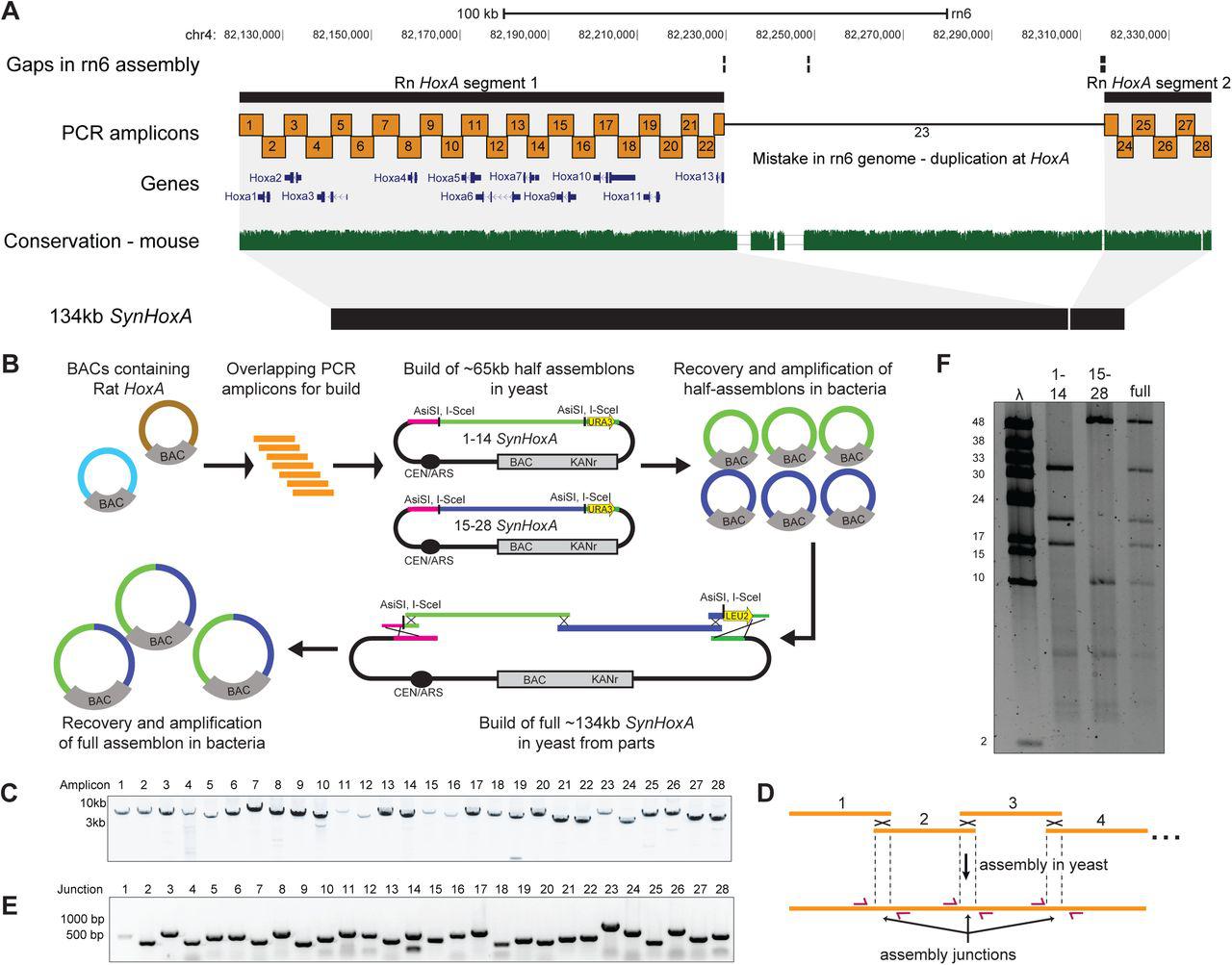
    (A) Layout of rat HoxA locus in the rn6 genome assembly. The rn6 genome includes an erroneous duplication at the HoxA locus between gaps in the assembly. The SynHoxA assemblon sequence is based on bringing together the two ‘separate’ RnHoxA segments. The sequence was segmented into 28 ∼5kb PCR amplicons with terminal homology of ∼200bp to adjacent amplicons. Conservation to the mouse genome is depicted using the multiz track from the UCSC genome browser. (B) Schematic depicting the assembly workflow for the 134kb SynHoxA assemblon. BACs containing Rat HoxA were used as PCR template to generate 28 segments tiling the entire HoxA locus. These segments were co-transformed into yeast with appropriate linkers and assembly vector to build two ∼65kb half assemblons into centromeric yeast-bacteria shuttle vectors. These half assemblons are recovered to bacteria and amplified. Full 134kb assemblon was built from half assemblons after releasing them from the vector using terminal restriction enzymes ( AsiSI ) and transforming into yeast. Full assemblon was then recovered from yeast into bacteria for amplification and verification. (C) Agarose gel of the 28 PCR amplicons that tile the 134kb SynHoxA assemblon. (D) Strategy to PCR-screen yeast colonies derived from assembly experiments. Primers (red arrows) span assembly junctions and test presence/absence of amplicons in many yeast colonies. Reproduced from ref with permission from authors. (E) Agarose gel showing one yeast colony carrying the full 134kb SynHoxA assemblon verified manually for the presence of all assembly junctions, using the strategy outlined in panel D. (F) Half and Full 134kb SynHoxA assemblon BACs purified from E.coli were digested with PvuI and separated using field inversion gel electrophoresis (FIGE). <t>Lambda</t> <t>monocut</t> ladder sizes are indicated in kb. Band sizes correspond to expected fragments.
    Lambda Monocut Ladder, supplied by New England Biolabs, used in various techniques. Bioz Stars score: 94/100, based on 1 PubMed citations. ZERO BIAS - scores, article reviews, protocol conditions and more
    https://www.bioz.com/product/lambda+monocut/Lambda+DNA-Mono+Cut+Mix/bio_rxiv__2021__07__07__451065-242-3-6
    Average 94 stars, based on 1 article reviews
    lambda monocut ladder - by Bioz Stars, 2026-11
    94/100 stars
      Buy from Supplier

    97
    New England Biolabs monocut lambda dna molecular weight
    (A) Layout of rat HoxA locus in the rn6 genome assembly. The rn6 genome includes an erroneous duplication at the HoxA locus between gaps in the assembly. The SynHoxA assemblon sequence is based on bringing together the two ‘separate’ RnHoxA segments. The sequence was segmented into 28 ∼5kb PCR amplicons with terminal homology of ∼200bp to adjacent amplicons. Conservation to the mouse genome is depicted using the multiz track from the UCSC genome browser. (B) Schematic depicting the assembly workflow for the 134kb SynHoxA assemblon. BACs containing Rat HoxA were used as PCR template to generate 28 segments tiling the entire HoxA locus. These segments were co-transformed into yeast with appropriate linkers and assembly vector to build two ∼65kb half assemblons into centromeric yeast-bacteria shuttle vectors. These half assemblons are recovered to bacteria and amplified. Full 134kb assemblon was built from half assemblons after releasing them from the vector using terminal restriction enzymes ( AsiSI ) and transforming into yeast. Full assemblon was then recovered from yeast into bacteria for amplification and verification. (C) Agarose gel of the 28 PCR amplicons that tile the 134kb SynHoxA assemblon. (D) Strategy to PCR-screen yeast colonies derived from assembly experiments. Primers (red arrows) span assembly junctions and test presence/absence of amplicons in many yeast colonies. Reproduced from ref with permission from authors. (E) Agarose gel showing one yeast colony carrying the full 134kb SynHoxA assemblon verified manually for the presence of all assembly junctions, using the strategy outlined in panel D. (F) Half and Full 134kb SynHoxA assemblon BACs purified from E.coli were digested with PvuI and separated using field inversion gel electrophoresis (FIGE). <t>Lambda</t> <t>monocut</t> ladder sizes are indicated in kb. Band sizes correspond to expected fragments.
    Monocut Lambda Dna Molecular Weight, supplied by New England Biolabs, used in various techniques. Bioz Stars score: 97/100, based on 1 PubMed citations. ZERO BIAS - scores, article reviews, protocol conditions and more
    https://www.bioz.com/product/lambda+monocut/Lambda+DNA/pmc10790599-278-13-20
    Average 97 stars, based on 1 article reviews
    monocut lambda dna molecular weight - by Bioz Stars, 2026-11
    97/100 stars
      Buy from Supplier

    94
    New England Biolabs lambda monocut
    (A) Layout of rat HoxA locus in the rn6 genome assembly. The rn6 genome includes an erroneous duplication at the HoxA locus between gaps in the assembly. The SynHoxA assemblon sequence is based on bringing together the two ‘separate’ RnHoxA segments. The sequence was segmented into 28 ∼5kb PCR amplicons with terminal homology of ∼200bp to adjacent amplicons. Conservation to the mouse genome is depicted using the multiz track from the UCSC genome browser. (B) Schematic depicting the assembly workflow for the 134kb SynHoxA assemblon. BACs containing Rat HoxA were used as PCR template to generate 28 segments tiling the entire HoxA locus. These segments were co-transformed into yeast with appropriate linkers and assembly vector to build two ∼65kb half assemblons into centromeric yeast-bacteria shuttle vectors. These half assemblons are recovered to bacteria and amplified. Full 134kb assemblon was built from half assemblons after releasing them from the vector using terminal restriction enzymes ( AsiSI ) and transforming into yeast. Full assemblon was then recovered from yeast into bacteria for amplification and verification. (C) Agarose gel of the 28 PCR amplicons that tile the 134kb SynHoxA assemblon. (D) Strategy to PCR-screen yeast colonies derived from assembly experiments. Primers (red arrows) span assembly junctions and test presence/absence of amplicons in many yeast colonies. Reproduced from ref with permission from authors. (E) Agarose gel showing one yeast colony carrying the full 134kb SynHoxA assemblon verified manually for the presence of all assembly junctions, using the strategy outlined in panel D. (F) Half and Full 134kb SynHoxA assemblon BACs purified from E.coli were digested with PvuI and separated using field inversion gel electrophoresis (FIGE). <t>Lambda</t> <t>monocut</t> ladder sizes are indicated in kb. Band sizes correspond to expected fragments.
    Lambda Monocut, supplied by New England Biolabs, used in various techniques. Bioz Stars score: 94/100, based on 1 PubMed citations. ZERO BIAS - scores, article reviews, protocol conditions and more
    https://www.bioz.com/product/lambda+monocut/Lambda+DNA-Mono+Cut+Mix/10__1128_slash_jvi__01983___18-144-44-49
    Average 94 stars, based on 1 article reviews
    lambda monocut - by Bioz Stars, 2026-11
    94/100 stars
      Buy from Supplier

    90
    Alpha Innotech lambda dna-monocut mix
    (A) Layout of rat HoxA locus in the rn6 genome assembly. The rn6 genome includes an erroneous duplication at the HoxA locus between gaps in the assembly. The SynHoxA assemblon sequence is based on bringing together the two ‘separate’ RnHoxA segments. The sequence was segmented into 28 ∼5kb PCR amplicons with terminal homology of ∼200bp to adjacent amplicons. Conservation to the mouse genome is depicted using the multiz track from the UCSC genome browser. (B) Schematic depicting the assembly workflow for the 134kb SynHoxA assemblon. BACs containing Rat HoxA were used as PCR template to generate 28 segments tiling the entire HoxA locus. These segments were co-transformed into yeast with appropriate linkers and assembly vector to build two ∼65kb half assemblons into centromeric yeast-bacteria shuttle vectors. These half assemblons are recovered to bacteria and amplified. Full 134kb assemblon was built from half assemblons after releasing them from the vector using terminal restriction enzymes ( AsiSI ) and transforming into yeast. Full assemblon was then recovered from yeast into bacteria for amplification and verification. (C) Agarose gel of the 28 PCR amplicons that tile the 134kb SynHoxA assemblon. (D) Strategy to PCR-screen yeast colonies derived from assembly experiments. Primers (red arrows) span assembly junctions and test presence/absence of amplicons in many yeast colonies. Reproduced from ref with permission from authors. (E) Agarose gel showing one yeast colony carrying the full 134kb SynHoxA assemblon verified manually for the presence of all assembly junctions, using the strategy outlined in panel D. (F) Half and Full 134kb SynHoxA assemblon BACs purified from E.coli were digested with PvuI and separated using field inversion gel electrophoresis (FIGE). <t>Lambda</t> <t>monocut</t> ladder sizes are indicated in kb. Band sizes correspond to expected fragments.
    Lambda Dna Monocut Mix, supplied by Alpha Innotech, used in various techniques. Bioz Stars score: 90/100, based on 1 PubMed citations. ZERO BIAS - scores, article reviews, protocol conditions and more
    https://www.bioz.com/product/lambda+monocut/lambda+dna+monocut+mix/pm28616744-50-21-29
    Average 90 stars, based on 1 article reviews
    lambda dna-monocut mix - by Bioz Stars, 2026-11
    90/100 stars
      Buy from Supplier

    Image Search Results


    (A) Layout of rat HoxA locus in the rn6 genome assembly. The rn6 genome includes an erroneous duplication at the HoxA locus between gaps in the assembly. The SynHoxA assemblon sequence is based on bringing together the two ‘separate’ RnHoxA segments. The sequence was segmented into 28 ∼5kb PCR amplicons with terminal homology of ∼200bp to adjacent amplicons. Conservation to the mouse genome is depicted using the multiz track from the UCSC genome browser. (B) Schematic depicting the assembly workflow for the 134kb SynHoxA assemblon. BACs containing Rat HoxA were used as PCR template to generate 28 segments tiling the entire HoxA locus. These segments were co-transformed into yeast with appropriate linkers and assembly vector to build two ∼65kb half assemblons into centromeric yeast-bacteria shuttle vectors. These half assemblons are recovered to bacteria and amplified. Full 134kb assemblon was built from half assemblons after releasing them from the vector using terminal restriction enzymes ( AsiSI ) and transforming into yeast. Full assemblon was then recovered from yeast into bacteria for amplification and verification. (C) Agarose gel of the 28 PCR amplicons that tile the 134kb SynHoxA assemblon. (D) Strategy to PCR-screen yeast colonies derived from assembly experiments. Primers (red arrows) span assembly junctions and test presence/absence of amplicons in many yeast colonies. Reproduced from ref with permission from authors. (E) Agarose gel showing one yeast colony carrying the full 134kb SynHoxA assemblon verified manually for the presence of all assembly junctions, using the strategy outlined in panel D. (F) Half and Full 134kb SynHoxA assemblon BACs purified from E.coli were digested with PvuI and separated using field inversion gel electrophoresis (FIGE). Lambda monocut ladder sizes are indicated in kb. Band sizes correspond to expected fragments.

    Journal: bioRxiv

    Article Title: Synthetic genomic reconstitution reveals principles of mammalian Hox cluster regulation

    doi: 10.1101/2021.07.07.451065

    Figure Lengend Snippet: (A) Layout of rat HoxA locus in the rn6 genome assembly. The rn6 genome includes an erroneous duplication at the HoxA locus between gaps in the assembly. The SynHoxA assemblon sequence is based on bringing together the two ‘separate’ RnHoxA segments. The sequence was segmented into 28 ∼5kb PCR amplicons with terminal homology of ∼200bp to adjacent amplicons. Conservation to the mouse genome is depicted using the multiz track from the UCSC genome browser. (B) Schematic depicting the assembly workflow for the 134kb SynHoxA assemblon. BACs containing Rat HoxA were used as PCR template to generate 28 segments tiling the entire HoxA locus. These segments were co-transformed into yeast with appropriate linkers and assembly vector to build two ∼65kb half assemblons into centromeric yeast-bacteria shuttle vectors. These half assemblons are recovered to bacteria and amplified. Full 134kb assemblon was built from half assemblons after releasing them from the vector using terminal restriction enzymes ( AsiSI ) and transforming into yeast. Full assemblon was then recovered from yeast into bacteria for amplification and verification. (C) Agarose gel of the 28 PCR amplicons that tile the 134kb SynHoxA assemblon. (D) Strategy to PCR-screen yeast colonies derived from assembly experiments. Primers (red arrows) span assembly junctions and test presence/absence of amplicons in many yeast colonies. Reproduced from ref with permission from authors. (E) Agarose gel showing one yeast colony carrying the full 134kb SynHoxA assemblon verified manually for the presence of all assembly junctions, using the strategy outlined in panel D. (F) Half and Full 134kb SynHoxA assemblon BACs purified from E.coli were digested with PvuI and separated using field inversion gel electrophoresis (FIGE). Lambda monocut ladder sizes are indicated in kb. Band sizes correspond to expected fragments.

    Article Snippet: 500 ng of lambda monocut ladder (New England Biolabs N3019S) were used as a molecular weight standard.

    Techniques: Sequencing, Transformation Assay, Plasmid Preparation, Amplification, Agarose Gel Electrophoresis, Derivative Assay, Purification, Nucleic Acid Electrophoresis

    (A) Layout of rat HoxA locus from the rn6 genome assembly depicting genes, Rn HoxA cluster segments in black and previously identified distal enhancers in purple. The Enhancers+SynHoxA assemblon sequence is made by stringing all the enhancers directly upstream of the SynHoxA assemblon sequence. Conservation to mouse genome is depicted using multiz track from the UCSC genome browser. (B) PCR amplicons tiling enhancer sequences were generated from Rat HoxA BACs and co-transformed into a yeast strain containing the 134kb SynHoxA assemblon with a gRNA vector targeting the left terminus of the 134kb assemblon. The enhancer PCR amplicons were used to repair this break, resulting in the construction of the 170kb Enhancers+SynHoxA assemblon. Assemblon was recovered into bacteria for amplification and verification. (C) Agarose gel of the 8 PCR amplicons containing enhancer sequences. (D) Agarose gel showing one yeast colony tested for the presence of novel enhancer assembly junctions and with primers spanning 134kb SynHoxA . (E) 134kb and 170kb assemblon BACs purified from E.coli were digested with PvuI and separated using FIGE. Lambda monocut ladder sizes are indicated in kb. Band sizes correspond to expected fragments.

    Journal: bioRxiv

    Article Title: Synthetic genomic reconstitution reveals principles of mammalian Hox cluster regulation

    doi: 10.1101/2021.07.07.451065

    Figure Lengend Snippet: (A) Layout of rat HoxA locus from the rn6 genome assembly depicting genes, Rn HoxA cluster segments in black and previously identified distal enhancers in purple. The Enhancers+SynHoxA assemblon sequence is made by stringing all the enhancers directly upstream of the SynHoxA assemblon sequence. Conservation to mouse genome is depicted using multiz track from the UCSC genome browser. (B) PCR amplicons tiling enhancer sequences were generated from Rat HoxA BACs and co-transformed into a yeast strain containing the 134kb SynHoxA assemblon with a gRNA vector targeting the left terminus of the 134kb assemblon. The enhancer PCR amplicons were used to repair this break, resulting in the construction of the 170kb Enhancers+SynHoxA assemblon. Assemblon was recovered into bacteria for amplification and verification. (C) Agarose gel of the 8 PCR amplicons containing enhancer sequences. (D) Agarose gel showing one yeast colony tested for the presence of novel enhancer assembly junctions and with primers spanning 134kb SynHoxA . (E) 134kb and 170kb assemblon BACs purified from E.coli were digested with PvuI and separated using FIGE. Lambda monocut ladder sizes are indicated in kb. Band sizes correspond to expected fragments.

    Article Snippet: 500 ng of lambda monocut ladder (New England Biolabs N3019S) were used as a molecular weight standard.

    Techniques: Sequencing, Generated, Transformation Assay, Plasmid Preparation, Amplification, Agarose Gel Electrophoresis, Purification

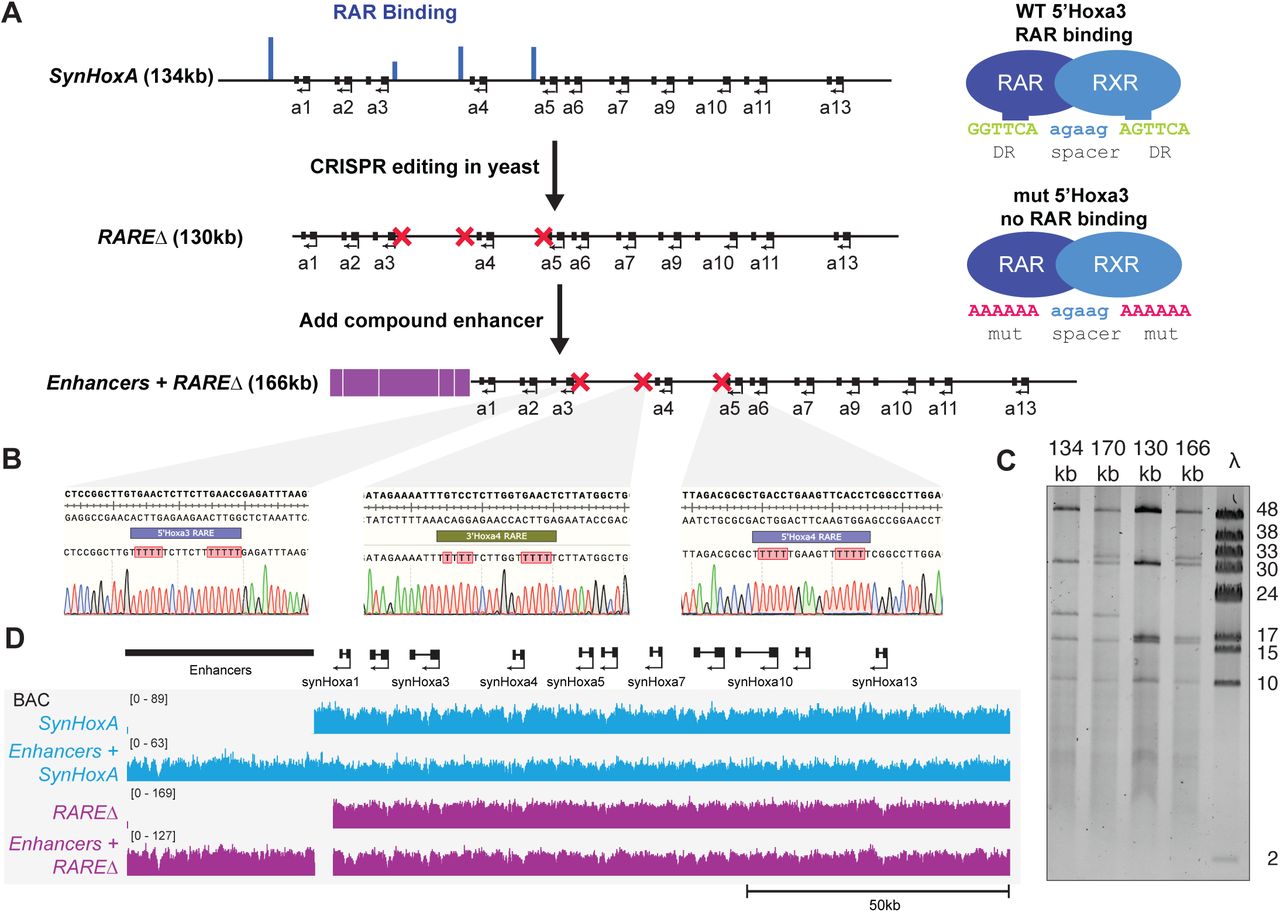
    (A) Schematic of assembly strategy for 130kb RAREΔ SynHoxA and 166kb Enhancers + RAREΔ SynHoxA . Nature of the RARE mutations is shown on the right. RAR binding data comes from previously published reports. (see Methods) (B) Sanger sequencing traces confirmed precise CRISPR editing of RAREs in yeast. (C) SynHoxA assemblon BACs purified from E.coli were digested with PvuI and separated using FIGE. Lambda monocut ladder sizes are indicated in kb. Bands correspond to expected fragment lengths. (D) Sequencing data of assemblon BACs purified from E. coli aligned to a custom mm10 reference genome. Positions of the enhancers and protein coding genes are shown in black.

    Journal: bioRxiv

    Article Title: Synthetic genomic reconstitution reveals principles of mammalian Hox cluster regulation

    doi: 10.1101/2021.07.07.451065

    Figure Lengend Snippet: (A) Schematic of assembly strategy for 130kb RAREΔ SynHoxA and 166kb Enhancers + RAREΔ SynHoxA . Nature of the RARE mutations is shown on the right. RAR binding data comes from previously published reports. (see Methods) (B) Sanger sequencing traces confirmed precise CRISPR editing of RAREs in yeast. (C) SynHoxA assemblon BACs purified from E.coli were digested with PvuI and separated using FIGE. Lambda monocut ladder sizes are indicated in kb. Bands correspond to expected fragment lengths. (D) Sequencing data of assemblon BACs purified from E. coli aligned to a custom mm10 reference genome. Positions of the enhancers and protein coding genes are shown in black.

    Article Snippet: 500 ng of lambda monocut ladder (New England Biolabs N3019S) were used as a molecular weight standard.

    Techniques: Binding Assay, Sequencing, CRISPR, Purification